
Dimije, blouses, aladže: a traditional dress counting its last years and days
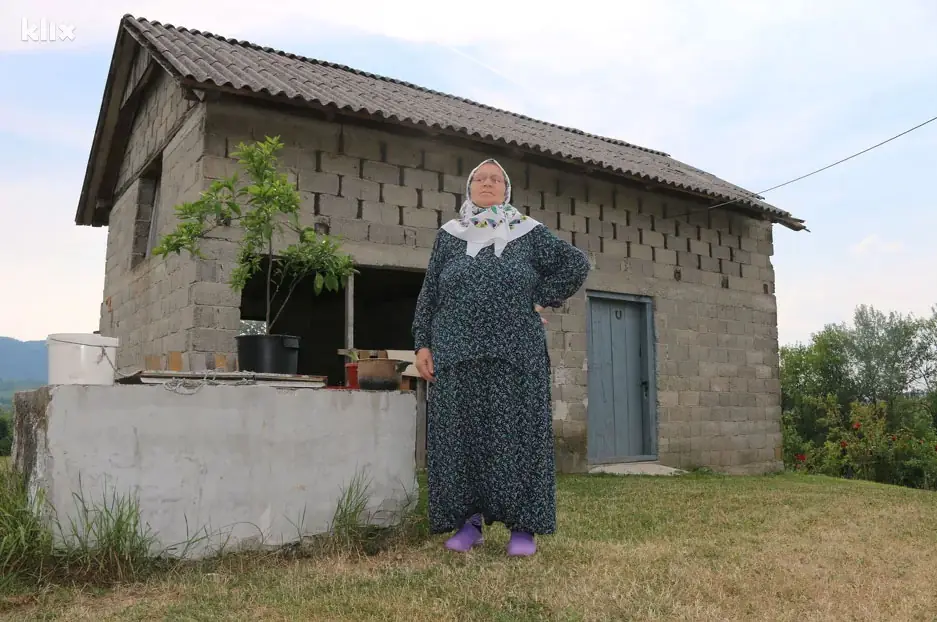
Dimije, a traditional dress that was the hallmark of many Bosnian hanums and women of the recent past, are on the verge of disappearing. Only in a few villages and areas of Bosnia and Herzegovina are there still women who wear dimije, and in Cazin we found Hanifa Hozanović, who talked about a time that many like to describe as one when "people had less, but lived better".
"Everything is upside down now, especially the young people" — with this generational phrase, which prefers earlier, not so distant times to the present moment, 67-year-old Hanifa Hozanović from Cazin begins her story.
Hanifa is a pleasant and noticeably sensible elderly woman from the Šturlić neighbourhood whose years, to put it in computer terms, have not deleted the full folders of her rich chest of memories. With her appearance, Hanifa also represents the last of the old Bosnian and Krajina women who stay apart from widely accepted trends and rules of behaviour — in this case, of dress — and who wear the pieces of cloth and clothing in which they felt most comfortable all their lives, and which over time, as usually happens, came to be called traditional and old-fashioned.
"There are still some young women, but very few, who want to wear dimije, blouses and aladže like the one I am wearing. The great majority do not want to wear any of it, so it is all being forgotten. As long as I live, I will wear them," Hanifa tells our portal.
She also wants to stress from the start that she sometimes puts on a skirt, but "when she goes to the mosque, to mevluds and other celebrations", she always wears dimije. And not just any dimije, but dimije and a blouse 'as a pair', because that is what she feels most at ease in.
Dimije used to be made of hemp
Hanifa started wearing dimije as a little child, back in the days when they were still woven.
"When I was growing up, hemp was sown — which they now say is a drug — and keten, that is, flax. To prepare it for weaving, the hemp was soaked in water for a month. Then it was taken out of the water and washed, then dried and pounded 'in a mortar'. In the next stage the hemp was 'hand-broken' and with a 'trlj' beautiful fibres were drawn out that could be spun. After that, people waited for winter, so that the 'spun' material could be put into a large barrel and covered with a cloth, and ash from the stove was sprinkled over it. This was then poured over with boiling water and left to stand for a while. In the end, when the material was taken out of the barrel, it was completely white. Only after all that could the weaving begin," our interviewee explains the complex process.
From this, she continues, shirts, dimije, blouses and sheets were woven, as well as the "long underpants" that, as a rule, all men wore. Shirts, which lie against the skin, were made of keten, which is naturally softer than coarser hemp.
"If people wanted the clothes and dimije to be colourful, they were dyed with alder, which is naturally reddish. The alder was put into hot water to boil, and the water would turn red. Then the yarn was put in and took on the colour of the alder," Hanifa points out.
When cloth appeared — or 'čit' for dimije and blouses, as Hanifa calls it — that was already something special.
"When I started first grade, I got dimije from my late aunt Mina. All my classmates kept asking me: 'Where did you get such beautiful 'čit' dimije?' I told them: 'My aunt Mina brought them to me!'" Hanifa says, as proudly as she did back then.
Čit, ćeftijani, svitnjak, tur
She then points to the dimije she was wearing at that moment and says she would have loved to have exactly such a pair when she was a girl.
"God only knows how many suitors I would have had back then. A girl who had 'real' dimije also had suitors in those days," she reveals.
What sets dimije apart from other clothing, in the traditional Krajina vocabulary (which, to be honest, a good part of the people of north-western Bosnia no longer understand today), are the 'ćeftijani': ties below the knee that close the inner part of both legs. At the waist, dimije are fastened with a 'svitnjak'. Dimije are also marked by a low-hanging seat, the 'tur', which was left on purpose to make walking easier.
"To sew a set of dimije and a blouse you need four metres of double-width 'čit', while dimije alone take 2.5 metres. Dimije are easy to cut; only the blouse is a bit more complicated," says Hanifa, who has sewn a great many dimije in her life and still has her own 'stan', a loom, on which she weaves today.
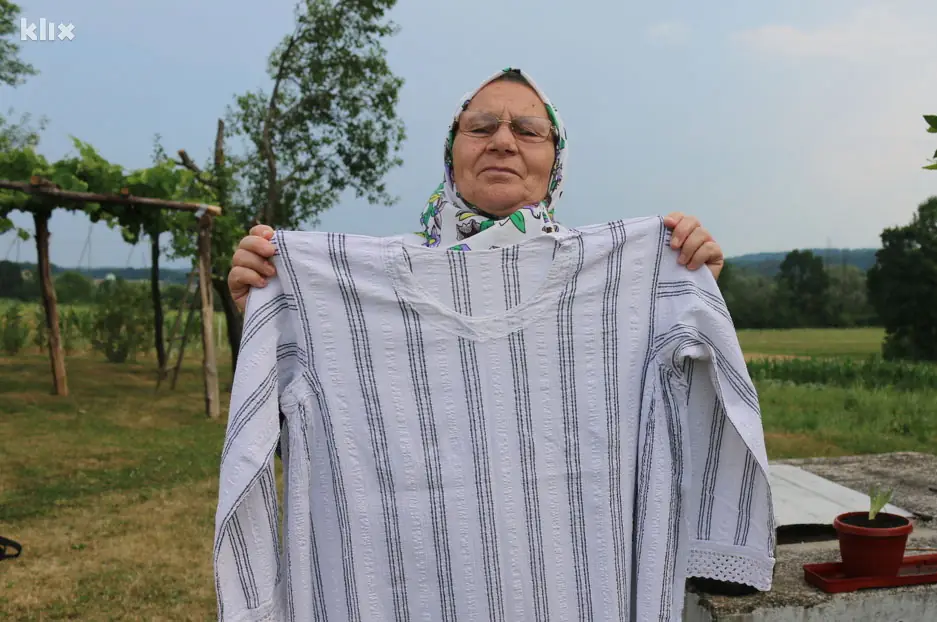
She shows us a shirt that women once wore and that no one wears anymore. She says it is more than 100 years old and sewn by hand. From her old house she also brings out a black headscarf with colourful details, which she says is called a mukadem and which women wrapped over their heads.
"I am afraid these things will die out very soon, that is, when the few of us older women are gone. I am especially sorry about dimije," Hanifa says with disappointment, adding at the end that she is nevertheless glad that there are still women today who know how to cut clothes the old way, and that this could, at least to some extent, save the traditional dress from being completely forgotten and dying out.
Source: Klix
This article was first published on the website of the Una Aqua centre, the predecessor of Japodski otoci, on 26 October 2017.